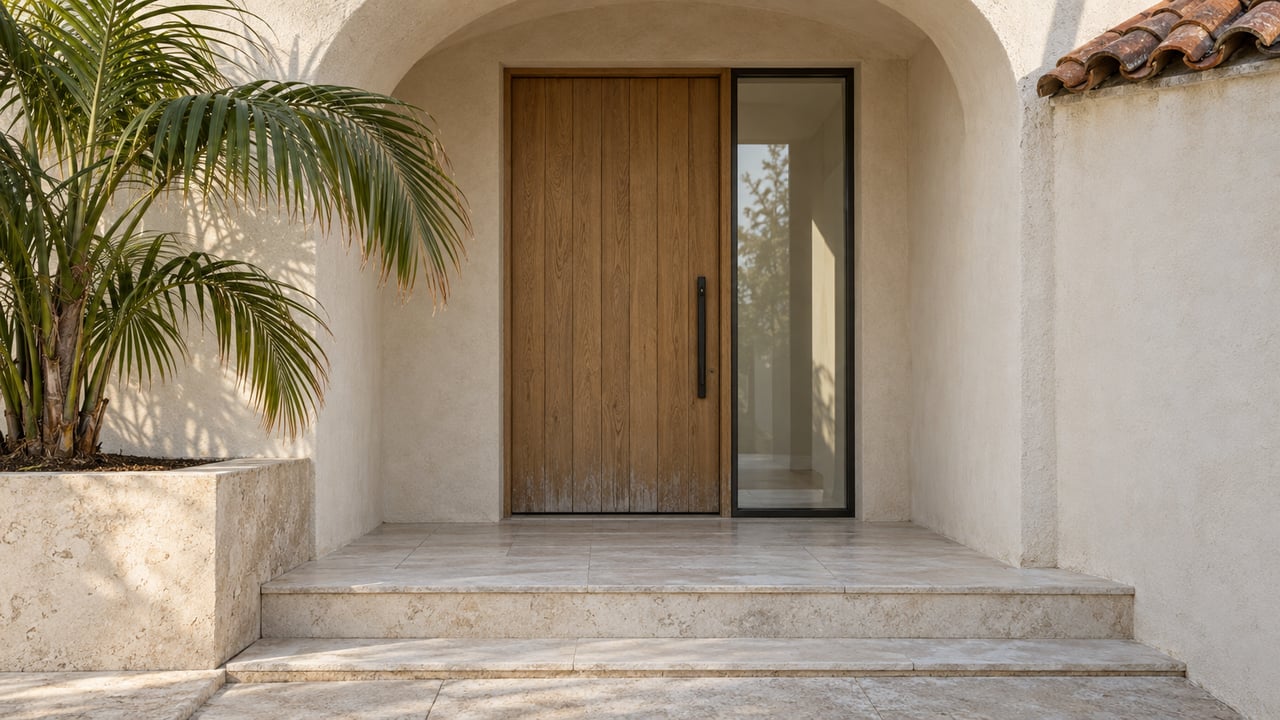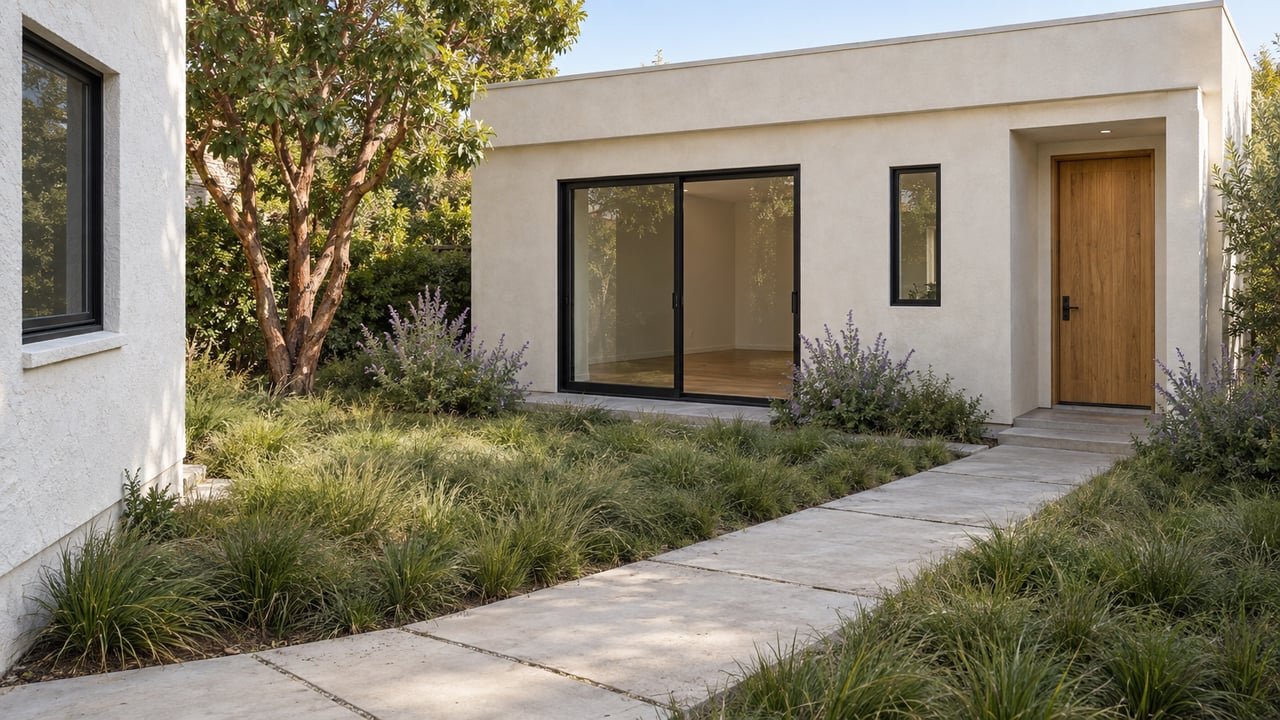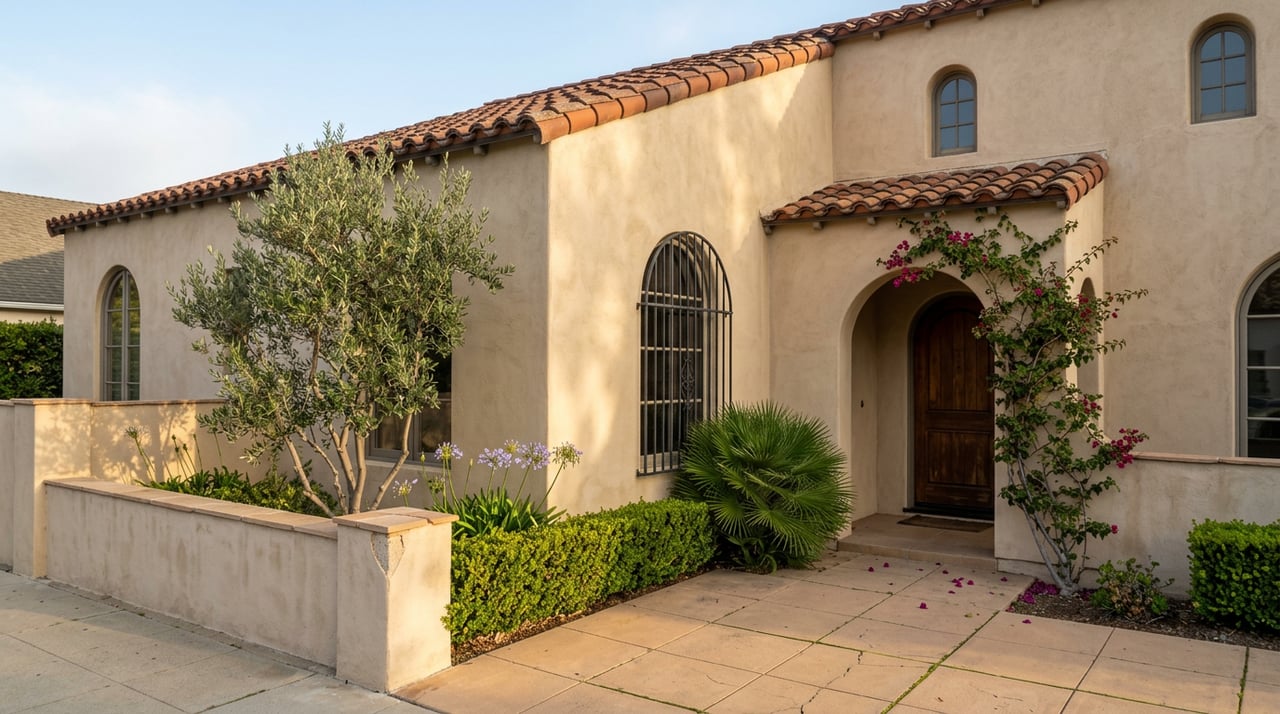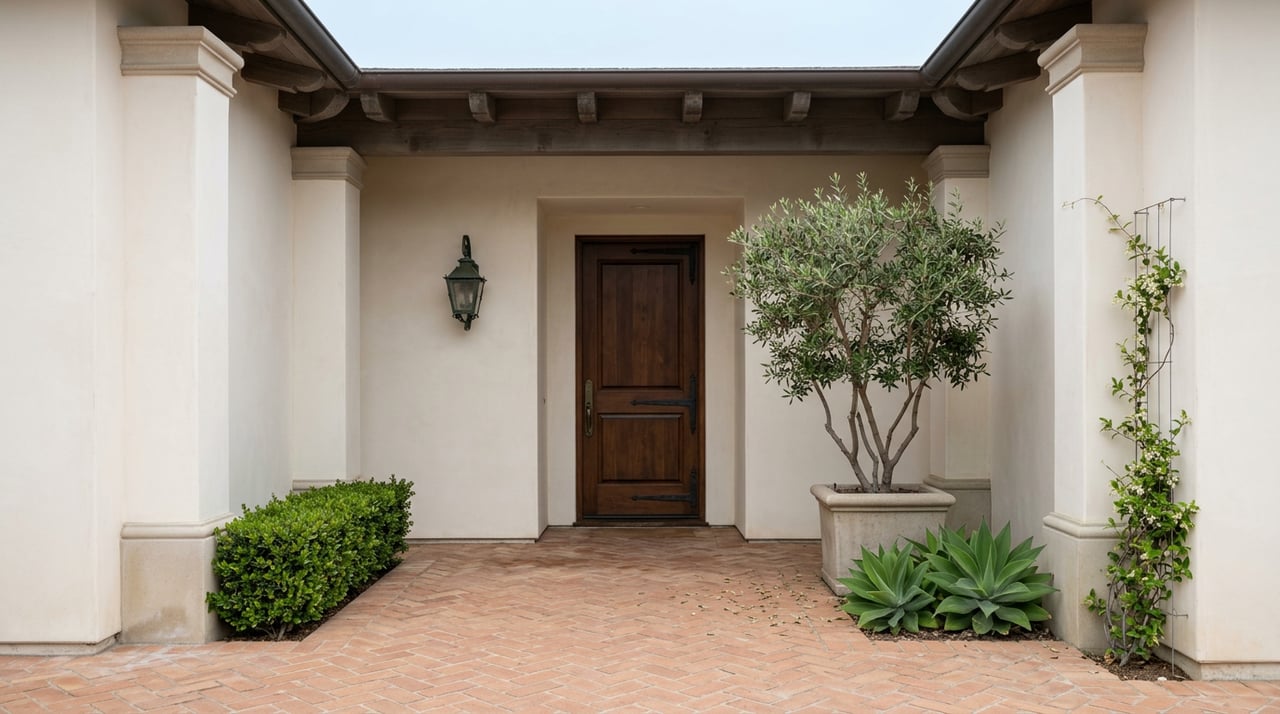
Picture two cottages a block apart in North Laguna. Same era, same square footage, same five-minute walk to Heisler Park. A buyer touring both would be forgiven for assuming whatever one can do, the other can too. One of these homes can legally host paying guests for a long weekend. The other cannot, not with a new owner, not with a perfect application, not ever, unless the rules change again. Nothing about the curb tells you which is which. The answer lives in a permit file at City Hall, and increasingly in a second document that sits on top of it.
That gap between what a house looks like it can do and what it's actually entitled to do is the real story behind Laguna Beach's short-term rental rules. Most coverage of this topic treats it as a simple ban. It isn't. It's a closed inventory system with a second layer of licensing bolted on in 2025, and the two layers behave differently in ways that matter enormously if income potential is part of your offer.
A closed inventory, not an open ban
Laguna Beach's current short-term lodging framework traces back to 2020, when the city and the California Coastal Commission settled a long fight over vacation rentals with a compromise: no new short-term lodging in the R-1, R-2, or R-3 residential zones, ever again, but existing permitted units in those zones could keep operating as "legal nonconforming" uses. At the time the deal closed, the city counted 117 permitted units citywide, 79 of them sitting inside residential neighborhoods. Those 79 are, functionally, a closed set. The city capped the total at 300 units, with a separate allowance of 165 home-share permits, but both the cap and the home-share carve-out apply only to commercial and mixed-use districts. A homeowner in a residential zone cannot apply for a new short-term permit, and cannot apply for a home-share permit either. The only way to end up with the right today is to have inherited it from before October 2020.
That's why the city has spent the years since steering new nightly-rental activity toward downtown, Coast Highway, and visitor-serving pockets of Laguna Canyon instead of into neighborhoods. The zoning ordinance itself makes the geography explicit: commercial and mixed-use districts can still absorb new permits up to the 300-unit ceiling, while residential streets are frozen at whatever legacy permits happen to still be attached to them.
The permit runs with the land. The license doesn't.
Here's the part that trips up buyers who assume a past Airbnb listing means a transferable right. The zoning entitlement under the 2020 ordinance runs with the land, not the owner, which is why the city can say a legal nonconforming unit "may continue to operate" after a sale. But in 2025 the city layered a second requirement on top of that entitlement: Chapter 5.84, which took effect July 1, 2025, with enforcement beginning October 1, 2025. This ordinance created the Short-Term Lodging Unit License, and that license is a separate, renewable, owner-specific credential. It has to be paired with an annual city business license, the underlying use permit, and Transient Occupancy Tax registration, and it typically runs on a three-year term matching the use permit.
Put plainly: the zoning says a house can be used this way. The license is the actual paperwork that lets someone use it that way, and that paperwork does not follow the deed automatically. A new owner has to confirm registry standing, may need to reapply, and has to meet a growing list of operating conditions, including a 24-hour local contact who can respond to a complaint within 60 minutes, neighbor notification within 200 feet at least 30 days before a new license is issued, and quarterly tax filings even in quarters with zero bookings. Total taxes and assessments on the rental revenue itself run to 14 percent between the Transient Occupancy Tax and the local tourism marketing assessment.
There's a second consequence worth sitting with. If a license is revoked for violations, the city won't reissue it for at least three years. In a commercial zone, that's a costly pause. In a residential zone, where no new short-term permits can be issued at all, a revoked or lapsed legacy license doesn't get replaced by anything. The right simply drops out of the city's inventory for good. The 79 residential units on the books in 2020 were the ceiling on day one. Every enforcement action since has only had room to shrink that number, never grow it.
Before you write an offer that assumes nightly income
A handful of steps separate an informed offer from an expensive assumption:
- Confirm the property's current registry standing directly with the city's Community Development and Finance departments, not from the seller's disclosures or past guest reviews.
- Identify which permit type is actually attached to the address: legal nonconforming residential, Administrative Use Permit, Conditional Use Permit, or home-share, since each behaves differently at resale.
- Check the HOA or CC&Rs independently of city zoning. Many Laguna Beach condominium and association communities restrict or prohibit short-term rentals on their own terms, and that restriction controls even where the city would otherwise allow it.
- Treat a strong Airbnb or Vrbo track record as a marketing detail, not a guarantee. A listing that generated nightly income for the current owner does not automatically transfer that right to you.
- Budget for the full compliance stack if the license does transfer or if you're buying in an eligible commercial zone: business license, use permit renewal, liability insurance of at least $500,000, and the 14 percent tax load on top of your operating costs.
Where the legacy right actually sits
The geography matters as much as the paperwork. Laguna's guard-gated enclaves in the north, Emerald Bay and Irvine Cove, are almost entirely custom estates with tightly controlled HOA governance and very low turnover. Even where a legacy city permit theoretically existed on a lot in one of these communities, the association's own restrictions are likely to be the binding constraint, not the city's. Emerald Bay alone comprises roughly 526 custom homes with median list prices near $12 million in early 2026, a price point where buyers are rarely underwriting nightly rental income in the first place.
Top of the World, the hillside neighborhood above downtown with canyon and city views, tells a different story. It's largely long-term, owner-occupied housing, and it saw prices climb toward roughly $3.7 million during 2025. It's not where Laguna's legacy short-term permits historically clustered.
The older cottages of North and South Laguna, along with Laguna Village near the commercial core, are the more likely places to find a residential lot still carrying one of those pre-2020 permits, simply because that's where much of the city's historic vacation-rental activity was concentrated before the ban. It's also where the boundary between residential and commercial zoning runs closest together, meaning a buyer might be a block away from a corridor where new licenses are still obtainable even if their specific lot isn't eligible.
What the smarter underwrite actually looks like
Given how narrow and fragile the nightly-rental right has become, the more durable investment thesis in Laguna Beach right now is a long-term or seasonal lease rather than a nightly booking calendar. Any lease of 31 consecutive days or longer sits entirely outside the short-term lodging ordinance: no unit license, no use permit, no nightly cap, no quarterly TOT filings. A recent oceanfront listing in the Laguna Sands community on South Coast Highway, priced near $3.5 million, was positioned around exactly this strategy, a beachfront property meant to carry part of its cost through a seasonal or long-term hold rather than a nightly rental license that may or may not survive the sale.
The math supports patience here too. As of mid-2026, Laguna Beach's citywide median home price sits between roughly $3.1 million and $3.2 million. During 2025, homes in the market broadly took longer to sell, averaging around 114 days, with the softest conditions and the most negotiating room concentrated in the $3 million to $5 million range, the exact band where most single-family purchases with an income component tend to land. Above $5 million, deals continued to trade with less friction. For a buyer weighing whether a property's rental potential is worth chasing, that segment of relative softness is also the segment where getting the permit question right, rather than assumed, matters most.
Quick answers before you write an offer
If a Laguna Beach listing mentions past short-term rental income, does that right come with the house? Not automatically. The zoning entitlement can run with the land in a legal nonconforming residential situation, but the operating license created under the 2025 ordinance is owner-specific and typically requires reapplication or reverification with the city.
Can I apply for a new short-term rental permit if I buy a house in a Laguna Beach residential zone? No. New short-term lodging permits, including home-share permits, are limited to commercial and mixed-use districts. Residential zones have been closed to new permits since October 2020.
Does my HOA matter if the city allows short-term rentals at my address? Yes, and it can be the deciding factor. Many Laguna Beach associations restrict or prohibit short-term rentals independently of city zoning, and that restriction typically controls regardless of what the city permits.
If you're weighing a Laguna Beach purchase where rental income is part of the plan, the diligence has to happen before contingencies come off, not after. Tyler Brown & Associates underwrites these questions the way an operator would, not just an agent, and can walk through what a specific address is actually entitled to before you write the offer. Book a private consultation to start there.