An accessory dwelling unit on the Eastside pencils out beautifully right up until the afternoon someone reads Costa Mesa's short-term rental ordinance start to finish. The deep, alley-fed lots that make this neighborhood the strongest ADU geometry in Orange County were never in question. What catches an investor mid-underwrite is that the backyard unit they're legally entitled to build cannot legally rent by the week, no matter how the comps look three blocks over in Newport Beach.
That gap between what the lot allows and what the lease allows is the whole story here. Get it wrong and the deal you underwrote is not the deal you own.
The lot geometry is not an exaggeration
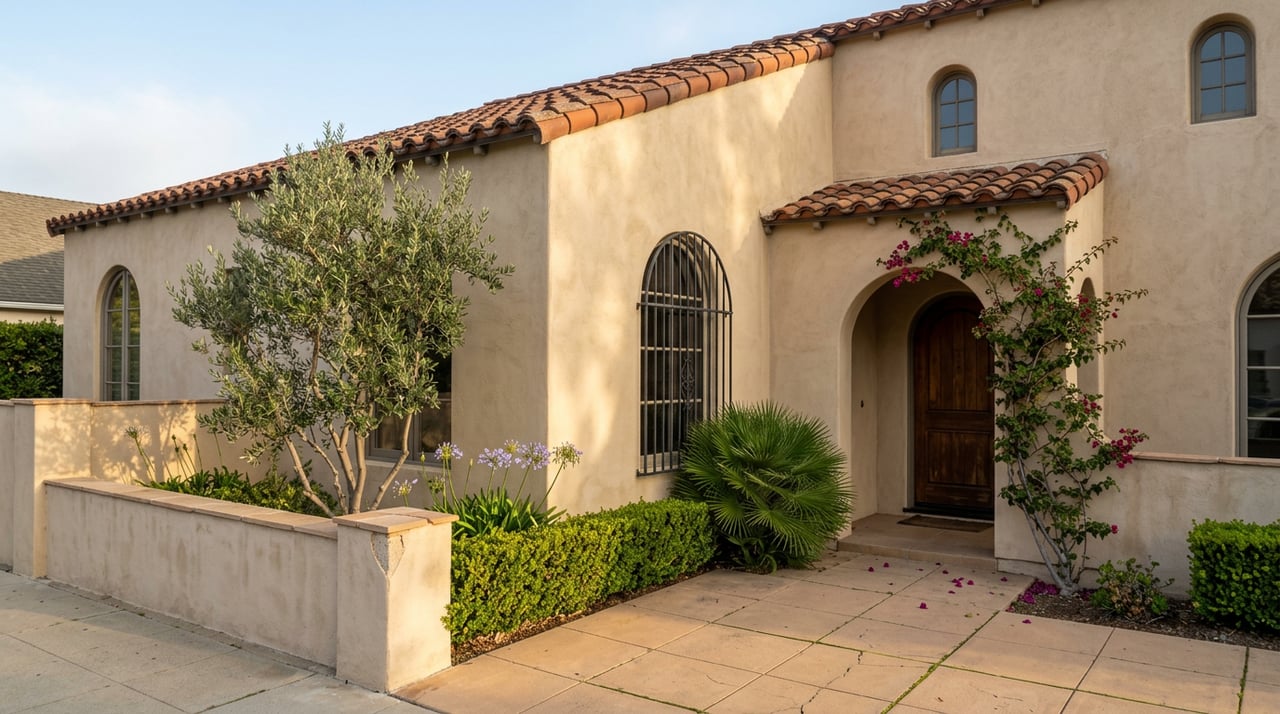
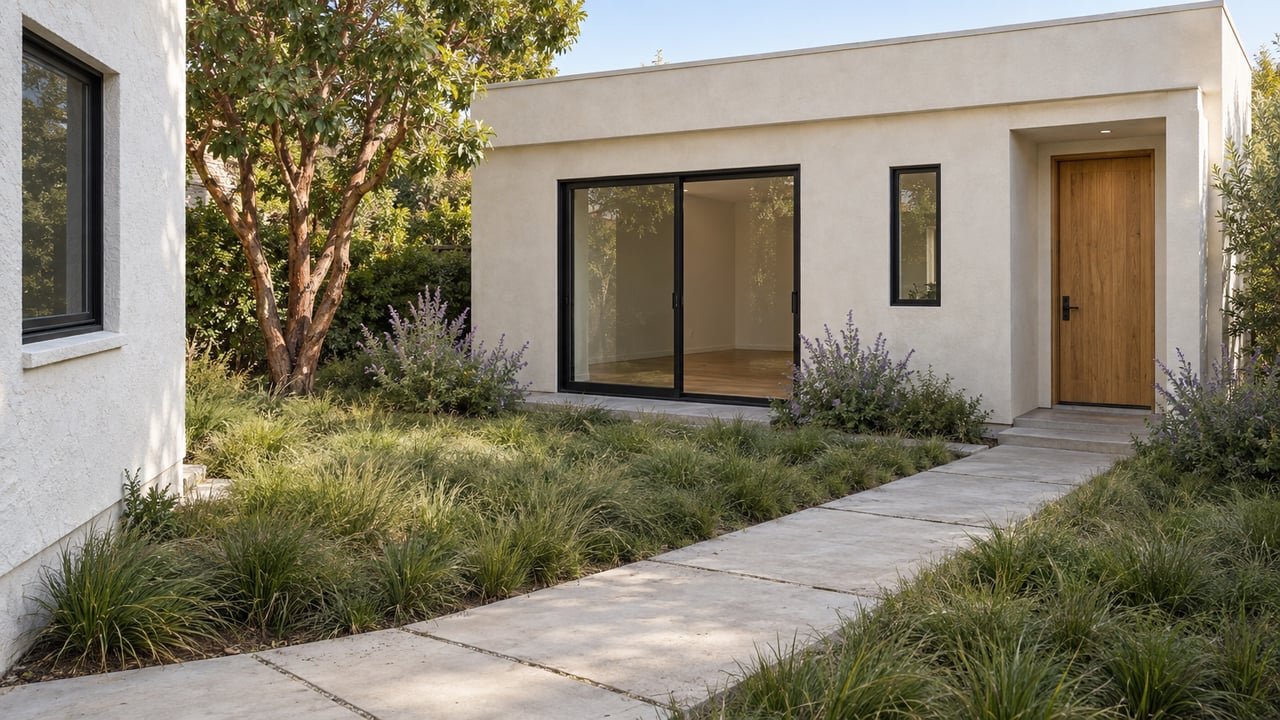
Eastside Costa Mesa earned its reputation as the city's best ADU territory the ordinary way: through decades of mid-century development that left it with deep parcels, detached garages, and rear-alley access that a lot of Orange County simply doesn't have. Streets off 17th Street in particular carry the kind of depth and setback room that makes a full detached unit, not just a converted garage, a realistic build rather than a stretch.
That geometry shows up in the market. A closed 0.41-acre parcel at 375 22nd Street, roughly 18,000 square feet and zoned R1, was marketed specifically around its lot-split and SB9 potential, the kind of listing language that only makes sense on a lot with room to spare. Local ADU contractors quote detached-unit budgets in the $245,000 to $440,000-plus range across Costa Mesa, and Eastside parcels tend to land at the higher end of that range because there is more square footage to build into.
None of that is where the surprise lives. The surprise is in what happens after the unit is finished and the owner starts thinking about how to rent it.
Two different clocks, and only one lets you list on Airbnb
Costa Mesa banned short-term rentals citywide under Ordinance 2021-17, adopted November 2, 2021. The ban is still fully in force. The city's own short-term rental page defines a short-term rental as a residential unit rented to paying occupants for less than 30 days, and the only carve-out is home sharing, meaning the owner physically lives on the property for the entire stay. An absent owner renting the whole place out, ADU included, does not qualify no matter how the listing is worded.
The ADU rule runs on a separate, slightly stricter clock. The city's land-use restriction on accessory dwelling units bars any rental under 31 days, one day past the general threshold. Two numbers, both taken directly from the city, and the extra day is exactly where the two rules diverge if you're trying to thread a narrow legal gap. In practice there isn't one. The city's own FAQ states plainly that ADUs cannot be used as short-term rentals in Costa Mesa, full stop, and enforcement carries fines up to $1,000 a day plus the possibility of criminal charges or nuisance abatement action.
Compare that to Newport Beach, a few minutes away, where short-term lodging is legal and regulated rather than banned outright. The city caps active permits at roughly 1,475 in multi-unit residential zones with a separate 75-permit ceiling for two mixed-use zones near Cannery Village and the upper Balboa Peninsula. Permits don't transfer automatically with a sale, which is its own due-diligence step, but a property that already holds one commands a real premium precisely because new permits are scarce. We've written through that permit math in detail for Newport Beach and for the Balboa Peninsula specifically, and the contrast with Costa Mesa is not subtle. One city built a permit system around demand it decided to manage. The other decided not to have that conversation at all.
What the long-term math actually pays for
Once the short-term option is off the table, the ADU underwrite becomes a long-term lease underwrite, and that's a different and more boring spreadsheet. Local rental figures for a Costa Mesa detached ADU track in the $3,000 to $4,500-plus a month range, which against a $245,000 to $440,000-plus build cost is a real number but not an Airbnb number. It's a number you compare against a 12-month lease, not a peak-July nightly rate.
| Eastside Costa Mesa ADU | Newport Beach STR property | |
|---|---|---|
| Legal rental floor | 31 days minimum | 30 days minimum, permit required |
| Typical detached build cost | $245,000-$440,000+ | N/A (existing structure, permit-dependent value) |
| Monthly income model | $3,000-$4,500+ long-term lease | Nightly rate, seasonal occupancy |
| Coastal Commission review | None, outside Coastal Zone | Applies in coastal-adjacent zones |
| Permit scarcity as an asset | Not applicable | Active, transferable permit adds resale premium |
That table isn't an argument against building on the Eastside. It's an argument for underwriting the unit as what it legally is, a long-term rental asset, rather than backfilling a short-term rental projection and hoping the city looks the other way.
The advantage the ban doesn't take away
The Eastside does keep one real edge that gets lost once the short-term rental question comes up: Costa Mesa sits outside the California Coastal Zone entirely. That means no Coastal Development Permit layer, no Coastal Commission review timeline stacked on top of the standard building process, the kind of overhead that adds months and legal fees to projects a few miles away in Newport Beach or Laguna Beach. A Costa Mesa ADU still runs through the city's standard plan check process, but it skips a review layer that coastal-adjacent cities can't avoid.
The city has also built a real amnesty path for older informal units through its Safe ADU Legalization Program, aimed at owners of pre-2020 unpermitted construction. It includes a confidential pre-inspection option and a defined correction path rather than a straight code-enforcement referral, which matters on the Eastside specifically, where older garage conversions and informal in-law setups have existed quietly for decades. Bringing one of those into compliance changes what it can legally do, including whether it can be counted as habitable square footage at resale.
One utility detail worth flagging before a budget gets finalized: Mesa Water District, not the city, handles water service here, and it meters each unit on a property separately rather than assuming an ADU shares the main house's connection. Confirming meter sizing with the district before construction avoids a change order later in the build.
A parcel line worth checking before you write an offer
Costa Mesa's Eastside wasn't always Costa Mesa. The city's 1953 incorporation boundaries covered most of what's now called the Eastside, but the decades that followed were a genuine block-by-block contest with Newport Beach over who annexed what, 106 separate annexations between 1954 and 1984 alone. Some of that history isn't fully closed out. As recently as 2013, the city was still initiating annexation proceedings for a leftover unincorporated county pocket known as the Santa Ana/Colleen Island, sitting along the city's easterly border near Newport Beach, under the state's small-island annexation program.
The practical reason this matters today: at least one parcel still marketed under the Eastside Costa Mesa name has been described as sitting in unincorporated Orange County territory, subject to a county rezoning rather than a city one. If a parcel like that turns out to be governed by the county rather than the city, the city's ADU ordinance, its Safe ADU Legalization Program, and its 31-day rental floor may not be the rules that actually apply. Before writing an offer on an Eastside lot with ADU or lot-split ambitions, it's worth confirming with the city's planning division whether the parcel sits inside current city limits or in one of these residual county pockets. A five-minute call avoids underwriting against the wrong rulebook entirely.
Quick answers before you underwrite
Does living in the main house let me rent the ADU short-term? No. The home-sharing exemption applies to the owner's presence during the stay, and the city's ADU restriction sets its own 31-day floor separate from that exemption. An owner-occupied main house doesn't unlock short-term rental rights for a detached unit out back.
Can an old, unpermitted backyard unit be legalized without a penalty? For units built before 2020, the Safe ADU Legalization Program offers a defined inspection and correction path rather than a straight code-enforcement case. It's worth requesting the confidential pre-inspection before assuming the unit needs to be torn out.
Will my ADU share a water meter with the main house? Not automatically. Mesa Water District meters each unit separately, and confirming sizing with the district before construction avoids a mid-build surprise.
How do I find out if a specific Eastside parcel is inside city limits? Contact the city's Economic and Development Services planning division directly with the parcel address. Given the Eastside's annexation history, a handful of parcels can still sit outside city jurisdiction even when marketed under the neighborhood's name.
The Eastside will keep producing some of the best ADU lots in the county. The unit built on one of them just needs to be underwritten as the long-term asset it legally is, not the short-term one the geometry might suggest.
If you're weighing an Eastside Costa Mesa lot for its ADU or lot-split potential and want the numbers run against what the city actually allows, Tyler Brown & Associates is glad to book a private consultation and walk through the specific parcel with you.