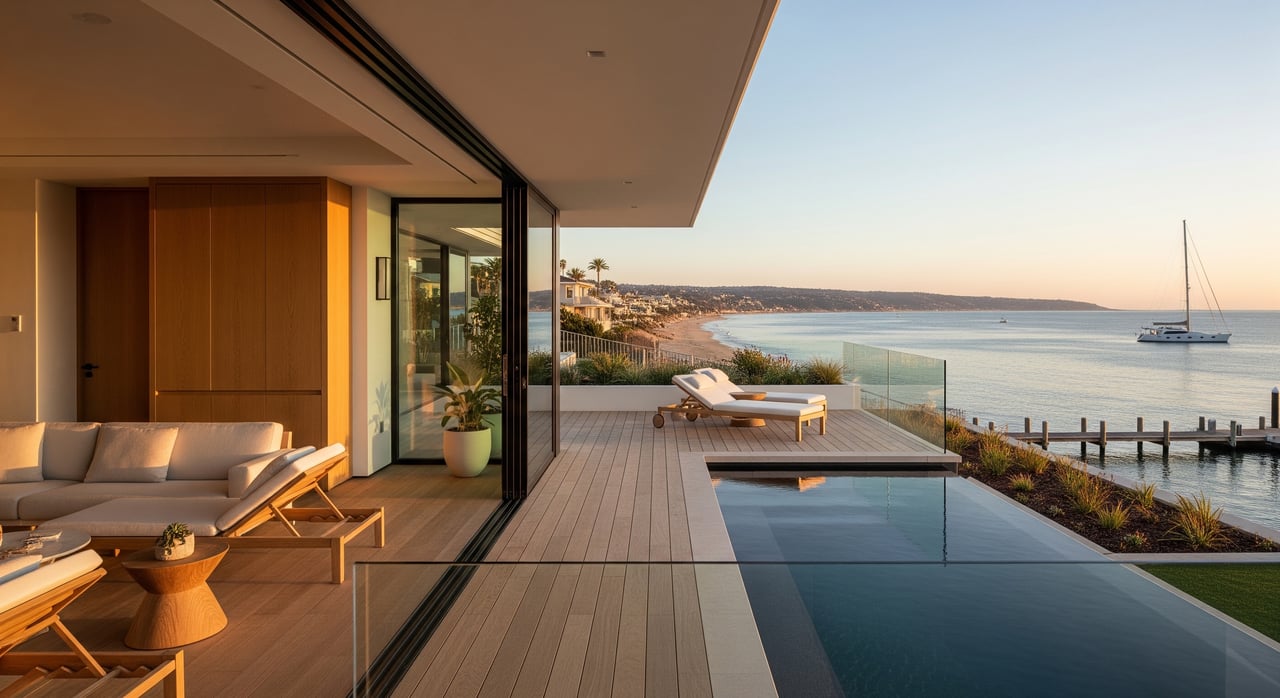
You know you want the Balboa Peninsula lifestyle. The question is which waterfront suits you best: the surf-facing oceanfront or the sheltered bayside on Newport Harbor. Each side delivers a distinct daily rhythm, property profile, and set of considerations that matter when you buy in 92662. In this guide, you’ll get a clear comparison, a practical checklist, and the key due diligence items to help you move forward with confidence. Let’s dive in.
Oceanfront lifestyle at a glance
Wake to the sound of surf, step onto the sand, and watch the horizon shift from sunrise glow to sunset color. Oceanfront homes on the Peninsula orient directly to the Pacific with broad, panoramic views. You trade calmer waters for instant beach access and an active shoreline scene, especially in peak season. Lot footprints can be narrow, so many homes build up to capture the view.
Bayside lifestyle at a glance
On the bay, your morning might start from a private dock with a quick paddle or a harbor cruise. Views feel more intimate, focused on boats, canals, and the harbor skyline. You are steps from calmer water and often a short stroll or bike ride to the ocean sand. Many bayside streets feel more tucked away, and certain canals can be especially peaceful.
Quick comparison snapshot
| Factor | Oceanfront | Bayside |
|---|---|---|
| Primary views | Panoramic Pacific horizon and surf | Harbor, canals, boats, and sunset reflections |
| Water access | Immediate ocean beach | Protected bay entry, often with docks |
| Boating | Typically at marinas or moorings | Many homes have private or shared docks |
| Noise pattern | Constant surf, seasonal beach activity | Boat engines, harbor events, quieter on canals |
| Privacy feel | Daytime beach traffic can be higher | Lower beach foot traffic, nighttime harbor lights |
| Lot/use trends | Vertical builds to maximize views | Mix of cottages to larger dock homes |
| Flood exposure | Wave action and erosion focus | Storm surge and higher canal water levels |
| Parking | Tight near beach and retail nodes | Often better street access and garages |
Views and orientation
- Oceanfront: Unobstructed west or southwest vistas deliver classic horizon views. You will hear and feel the ocean. Salt exposure can be higher, which may influence maintenance.
- Bayside: Views range from open harbor to quiet canals with docks and promenades. Orientation varies, so confirm what you see from key rooms and outdoor spaces.
Due diligence:
- Confirm any view easements and height limits nearby to reduce future blockage risk.
- If views are a priority, include clear view language in your offer contingencies.
Beach and water access
- Oceanfront: Sand and surf are at your doorstep or just across the public walk. It is ideal if you want daily beach walks, surfing, and lifeguard-served summer zones.
- Bayside: You get protected water that suits paddleboarding, kayaking, and swimming in designated areas. The ocean beach is still close, but it is a short walk or ride, not right out the door.
Due diligence:
- Map public access paths to the beach or bay near the property.
- Review any private easements or HOA rules that affect water entry.
Boating and docks
- Oceanfront: Private deep-water docks on the Pacific-facing side are uncommon due to exposure to surf and tides. Boaters typically use Newport Harbor marinas or moorings.
- Bayside: This is the boater’s advantage. Many homes include private docks or access to slips for easy launching and mooring in protected waters.
Due diligence:
- Verify dock ownership, recorded easements, slip permits, and maintenance obligations.
- Review Harbor Commission rules and any transfer or waitlist restrictions tied to municipal slips.
Noise and privacy
- Oceanfront: Expect a steady surf soundtrack and more daytime activity near access points, retail nodes, and piers. Nights can feel quieter without boat traffic.
- Bayside: Harbor noise is more intermittent, with boat engines and event-related sounds. Many canals feel calm, especially away from major channels.
Due diligence:
- Visit at different times, including weekends and evenings, to gauge real-world noise and privacy.
- Ask about local events that may affect certain dates, such as regattas or fireworks.
Property types and design
- Oceanfront: High-value single-family homes, often rebuilt to maximize views, dominate many blocks. Narrow lots encourage multi-level design.
- Bayside: Inventory ranges from classic cottages and mid-century homes to larger custom residences with docks and generous outdoor areas, especially on back canals.
Due diligence:
- Review historical records for lot splits, easements, and flood mitigation like raised foundations.
- Study recent permits to understand neighborhood redevelopment trends and height patterns.
Flood and insurance
Both sides share coastal exposure, but risk type differs. Oceanfront homes contend more with wave action and erosion. Bayside properties focus more on storm surge and higher canal water levels. Insurance premiums vary by FEMA flood zone, elevation, building age, and mitigation measures. New construction may face mandatory elevations or coastal development permits for shoreline work.
Due diligence:
- Review FEMA Flood Insurance Rate Maps and request the property’s elevation certificate.
- Ask for recent flood claims history and quotes from insurers.
- Check local Coastal Commission guidance and any recent seawall, rip-rap, or dune projects.
Parking and access
- Oceanfront: Street parking is tight near beach access and retail corridors. Some homes have garages, but visitor parking can be limited during peak season.
- Bayside: Many bayside properties feature private driveways and garages, and certain canal streets can be easier for guest parking.
Due diligence:
- Confirm garage dimensions and local parking rules, including residential permits.
- If you plan to add an ADU or guest space, verify municipal code and on-site parking requirements.
Short-term rental rules
Newport Beach regulates vacation rentals and transient occupancy taxes, and rules can change. Oceanfront homes near tourist zones can be strong performers when permitted. Bayside homes can also command premium nightly rates for waterfront access. Always confirm what is allowed today rather than assuming a past use still applies.
Due diligence:
- Verify current city regulations and any neighborhood or HOA restrictions.
- Request CC&Rs, meeting minutes, and any known enforcement updates.
Market dynamics
Oceanfront location typically commands a premium for direct beach access and unobstructed views. Bayside can match or exceed pricing when a property offers a private dock, deep-water access, or larger lots, but on average it may trade at a discount to true oceanfront when you control for lot size and improvements. Inventory is limited on both sides, and exact pricing is highly sensitive to orientation, dock rights, lot size, and remodel level.
Buyer tip:
- Separate comps by side of the Peninsula, frontage type, dock presence, and renovation status. Six to twelve months of sold comps in the immediate micro-area is ideal.
Which side fits you
Choose oceanfront if you want:
- Daily sand access and iconic horizon views.
- A surf soundtrack and sun-forward exposure.
- A modern, vertical home built to capture the beach.
Choose bayside if you want:
- Private dock access and effortless boating.
- Calmer water for paddleboarding and family swims.
- A wider mix of lot sizes and outdoor spaces.
Smart due diligence in 92662
Use this checklist to reduce surprises and support a confident decision:
- Views and noise: Visit mornings, evenings, and weekends to sample surf, boat traffic, and beach crowds. Note lighting and privacy after dark.
- Boating and docks: Request recorded dock ownership, slip permits, maintenance agreements, and Harbor Commission rules. Confirm transfer limits.
- Flood and insurance: Obtain the elevation certificate, recent claims history, and quotes. Reference FEMA maps, NOAA sea-level projections, and local guidance.
- Title and easements: Check for public access ways, view easements, and encroachments that affect use or privacy.
- Permits and redevelopment: Review permits on adjacent parcels, verify height limits, and scan for pending applications that could alter views.
- HOA and rentals: Request CC&Rs, meeting minutes, and any short-term rental rules, fees, and enforcement history.
- Utilities and shoreline work: Ask about seawalls, rip-rap, dune nourishment, and responsibility for upkeep. For canal properties, review sewer and storm drain notes.
- Comps and market data: Pull MLS sold comps by micro-location, frontage type, dock presence, and renovation level. Track days on market and seasonal shifts.
Work with a local advisor
Choosing between oceanfront and bayside on the Balboa Peninsula is about fit. Your ideal side reflects how you spend your mornings, where you host friends, and what you value most in a home. A focused, coastal-savvy team can help you weigh lifestyle, underwriting, and risk with clarity, then source the right property on or off market. If you are ready to compare options, request dock and flood documentation, and see the most relevant comps, connect with Tyler Brown & Associates. Book a private consultation.
FAQs
Is oceanfront louder than bayside on Balboa Peninsula?
- Oceanfront brings steady surf noise and more daytime beach activity, while bayside has intermittent boat and event noise that can feel quieter on residential canals.
Which side is better for boating in 92662?
- Bayside is best for boaters because many properties include private docks or convenient slip access in protected harbor waters.
Do oceanfront homes hold value better in Newport Beach?
- Oceanfront often commands a premium for direct beach access and views, but value retention depends on maintenance, exposure to wave action, and broader market cycles.
Are insurance costs higher on bayside or oceanfront?
- It depends on the property’s elevation, FEMA flood zone, and mitigation; bayside faces storm surge risk in canals, while oceanfront faces wave action and erosion.
Is parking easier on the bayside in 92662?
- Generally, bayside streets and canal areas can offer easier parking and more private driveways, while oceanfront near access points can be tighter in peak season.
How can nearby redevelopment affect my views on the Peninsula?
- New construction on adjacent lots can change view corridors and light; review permits, height limits, and pending applications before you buy.