As Voice of OC reported, California's own tidelands regulator recently used a specific phrase to describe how Newport Beach sets rent on the docks behind its most expensive waterfront homes: the practice "may violate both the granting statute and the California Constitution." That finding came out of a December 2025 review by the California State Lands Commission, and it lands squarely on Lido Isle, where roughly a quarter of the island's 800 homes carry a private dock behind them.
If you're buying or selling one of those homes this year, the dock is probably the least understood part of the deal. Buyers assume it conveys like the pool or the garage. Sellers assume the rent stays flat because it always has. Neither assumption is safe anymore.
The dock permit transfer
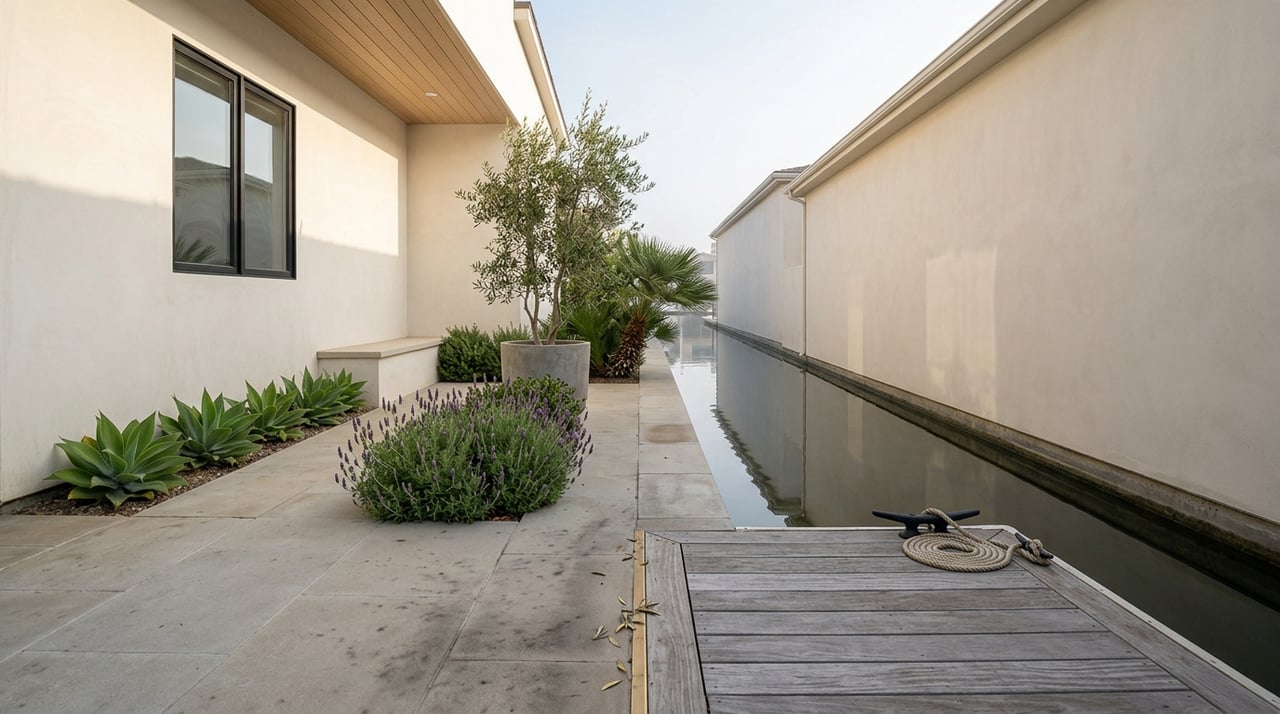
Almost all of Newport Harbor's submerged land is public tideland, held in trust for the state and managed by the city under the Beacon Bay Bill of 1978. What sits on top of that tideland behind a Lido Isle home, the pier, the gangway, the float, exists because the city issued a residential pier permit to the owner of the upland lot. That permit is what changes hands when the house sells.
The city's own harbor permit page spells out the mechanics: a transfer application listing both buyer and seller has to be submitted to the Public Works Department, with both parties' signatures due at close of escrow, along with a transfer fee. The city then processes the transfer.
Skip that step, or assume it happens automatically because the seller has always had a dock there, and you can close on a Lido Isle waterfront home only to discover the permit is still sitting in the previous owner's name.
Why the rent behind that permit is about to move
For years, the city set residential pier rent low and largely left it there. The State Lands Commission's December 2025 report called that pattern out directly, finding that mooring rents have been re-appraised regularly while residential pier rents have instead been reduced through smaller lease areas and rate cuts without new appraisals. California's Lieutenant Governor, who chairs the commission, said at the December meeting, "you shouldn't have to be wealthy in California in order to access the coast," a remark reported by Voice of OC, even as the report simultaneously flagged that Newport's wealthiest waterfront owners have been undercharged for their piers relative to what the tidelands are actually worth.
The city has since laid out a public timeline for fixing this, and it's worth understanding exactly where that timeline sits as of this summer:
- New independent appraisals of residential pier leases are underway in 2026, alongside a review of how pier rental area is calculated, since the state flagged a discrepancy in how the city measures the water space boats actually occupy.
- A series of public meetings started this spring and continues through the winter, covering rate methodology, transferability, and how any changes would be phased in.
- A draft policy package is expected by winter 2026 into 2027.
- A full City Council vote on the new framework is targeted for 2027.
The City of Newport Beach has been explicit that no rate increase or transfer restriction takes effect without a council vote and public notice, so nothing changes at your closing table tomorrow. But if you're underwriting a Lido Isle waterfront purchase with a ten-year hold in mind, you're very likely underwriting through the exact window when this policy package becomes final. Pier rent is a small line item next to a multi-million dollar purchase price, but the direction it's headed is up, not flat, and a buyer who prices the property as if today's rent is permanent is pricing it wrong.
There's a second wrinkle in the same report: some pier permit holders have been subleasing their docks without disclosing it or paying the commercial rate the city requires for sublease arrangements. If you're buying a Lido Isle property where the dock has been rented out separately from the house, ask directly whether that arrangement was ever reported to the city. It's the kind of detail that surfaces during a permit transfer inspection, not before, if nobody asks.
The measurement that decides how much boat the property can actually hold
Every Lido Isle waterfront lot has two lines drawn through the water behind it that were never up for negotiation with a homeowner. The bulkhead is the retaining wall at the back of the property. Further out sits the pierhead line.
The distance between those two lines determines the largest vessel the property can practically berth. Two Lido Isle homes with identical square footage and identical frontage can have very different water behind them if one has a forty foot gap to the pierhead line and the other has seventy five feet. That gap doesn't show up in a listing photo. It shows up in the harbor development permit and the approved dock drawings on file with the city, which is exactly why pulling those records, and confirming what's actually in the water matches what was approved, belongs on the inspection checklist before you write an offer, not after.
What this looks like on the island itself
Lido Isle's own community association operates under a set of protective restrictions first recorded in 1928, long before most of the current dock rules existed, and the island's governance still reflects how central the water is to daily life there. The Lido Isle Community Association's current board includes a director whose responsibilities are specifically Marine Facilities, separate from architecture or security, and the association runs its own dock at the clubhouse for member use.
Even LICA's shared infrastructure isn't exempt from the state process that governs individual residential piers. In 2024, the California Coastal Commission approved a permit for a private recreational floating dock system serving Lido Isle Community Association residents, and that approval came with a pre-construction eelgrass survey, since Newport Bay is habitat for eelgrass and the invasive algae Caulerpa, and confirmation that the project wouldn't create new impacts to public access.
A short checklist before you write or accept an offer
- Confirm the pier permit is current, in the seller's name, and in good standing with the city before you remove contingencies.
- Request the approved harbor development permit and dock drawings, and verify what's in the water today matches them.
- Ask whether the dock has ever been subleased separately from the house, and whether that sublease was reported to the city.
- Order an independent marine inspection of the dock, pilings, and bulkhead.
- Review LICA's current marine and CC&R rules directly with the association rather than relying on a listing description, since aesthetic and storage rules sit on top of, not instead of, the city's permit requirements.
Quick answers before escrow
Does the dock permit transfer automatically when the house sells? No. It requires a joint application from buyer and seller, with signatures due at close of escrow.
Will my pier rent go up before I close this year? Not automatically. The city has stated no rate change takes effect without a City Council vote, which isn't expected until 2027, but the appraisal work setting up that vote is happening now.
Can I add a dock to a Lido Isle property that doesn't already have one? Any new or modified dock in Newport Harbor triggers review.
None of this makes Lido Isle a harder place to buy or sell. It makes it a place where the paperwork behind the water matters as much as the water itself, and where a buyer who understands that arrives at the negotiating table with a clearer view of what they're actually paying for.
If you're weighing a Lido Isle waterfront purchase or preparing to list one, Tyler Brown & Associates can walk through the permit status, the transfer timeline, and what the pending harbor rate review means for your specific dock before you're under contract. Book a private consultation to start that conversation.
This article is general information, not legal, tax or financial advice. Consult a qualified professional about your situation.